How to Air Down a Ford F-150 / Raptor / Tremor: Off-Road Tire Pressure Guide
Ford F-150, Raptor, and Tremor off-road tire pressure guide. PSI by terrain for safe, confident off-roading.
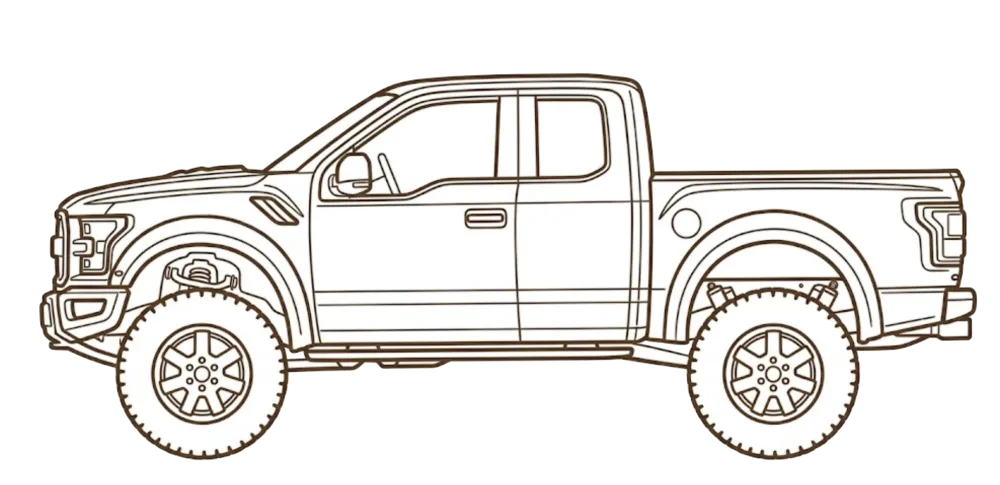
Vehicle Specs
| Spec | Details |
|---|---|
| Weight Range | 4,500 - 5,700 lbs |
| Wheelbase | 145.0 - 163.7" F-150 wheelbase varies 18.7" across 5 cab/bed configs: Reg Cab 6.5'/SuperCab 6.5'/SuperCrew 5.5' = 145.0"; Raptor = ~145" (treat as 145); SuperCrew 6.5' = 157.0"; Reg Cab 8'/SuperCab 8' = 163.7". MFQ+ covers 145-148; SuperCrew 6.5' and 8' beds (>148") need MFMQ Mega Quad. See Vehicle PSI Data tab for per-config splits. |
| Stock Tire Size | 275/65R18 (Raptor: 315/70R17 / 37") |
| Common Upgrades |
|
| Recommended Hose Kit | MORRflate MFQ+ (MFMQ for 6.5'/8' beds) |
Recommended PSI by Terrain
| Tire Setup | Street | Gravel | Rock | Sand | Mud | Snow | Min Safe |
|---|---|---|---|---|---|---|---|
| Stock (275/65R18) | 30-35 | 26-30 | 18-22 | 15-18 | 18-22 | 30-34 | 15 |
| 35" Raptor (315/70R17) E | 28-34 | 22-26 | 10-15 | 12-15 | 15-20 | 28-32 | 10 |
| 37" Raptor (37x12.5R17) C | 34-40 | 26-30 | 14-18 | 12-15 | 15-20 | 12-15 | 12 |
Notes
Heavy truck -- stay conservative. On 35"/37" E-rated, same ranges as JL (10-15 rock, 12-15 sand). Raptor has beadlock-capable wheels from factory. Start at 22 PSI stock, 18 PSI on 35s.
Stock (275/65R18): Heavy truck. Stay conservative. Loaded = stay higher.
35" Raptor (315/70R17) E: Raptor has beadlock-capable wheels. Same tire PSI as JL 35s.
37" Raptor (37x12.5R17) C: Very heavy combo. Beadlock-capable from factory. OE tire is the BFGoodrich KO2 37x12.50R17 Load Range C. Rock, Deep Snow and Min Safe are set for Raptor weight (about 5,870 lbs curb, not yet confirmed from a Ford document), not copied from the Wrangler 37. Deep Snow is an off-road flotation figure.
How to Air Down Your Ford F-150 / Raptor / Tremor
- Park on a flat, stable area before the trailhead.
- Set the parking brake and check current tire pressure with a gauge.
- Use your deflator or MORRflate system to release air to your target PSI (see table above).
- Adjust all four tires evenly. Drive a short distance, recheck, and fine-tune.
- Re-inflate before returning to pavement. Low pressures at highway speeds cause heat buildup and blowout risk.
Frequently Asked Questions
What PSI should I air down my F-150 to off-road?
How do I air down my Ford Raptor?
Can I air down my F-150 with stock tires?
What's the minimum PSI for an F-150 without beadlocks?
How long does it take to air back up an F-150?
Related Resources
- SL vs LT Tires: What You Need to Know Before Airing Down
- Airing Down 101: The Easiest Upgrade You'll Ever Make
- The Off-Road Tire Pressure Cheat Sheet You'll Actually Save
- TPMS and Off-Roading: Why Your Truck Is Screaming at You
- Sidewall Height: Why Your Wheel Size Decides How Far You Can Air Down
- Portable Air Compressor Buyer's Guide
- The Great Deflator Showdown: MORRflate vs Staun vs ARB
Shop MORRflate Gear Read the Full Guide
Learn on the trail with a pro.
If you want to feel the difference in person, SNVORA runs hands-on off-road training courses. We cover tire pressure, recovery, and the skills that make trail days safer and more fun.