How to Air Down a Jeep Wrangler JL / JLU: Off-Road Tire Pressure Guide
Complete off-road tire pressure guide for Jeep Wrangler JL and JLU. Recommended PSI by terrain with step-by-step airing down instructions.
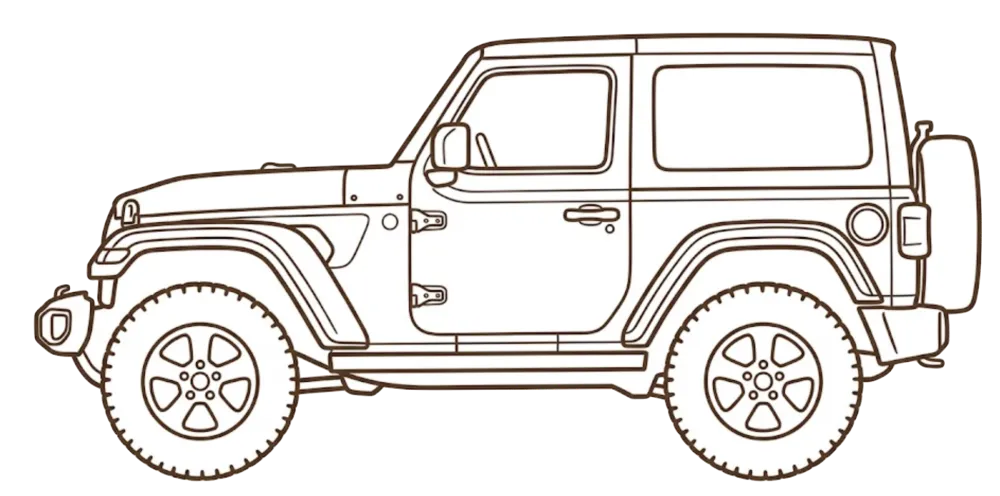
Vehicle Specs
| Spec | Details |
|---|---|
| Weight Range | 4,200 - 5,300 lbs |
| Wheelbase | 96.8 / 118.4" 2-door 96.8"; 4-door (JLU, all 4xe & 392) 118.4". Use Quad even on 2dr -- hood/fender compressor mounts eat margin. |
| Stock Tire Size | 245/75R17 (32") |
| Common Upgrades |
|
| Recommended Hose Kit | MORRflate MFQ |
Recommended PSI by Terrain
| Tire Setup | Street | Gravel | Rock | Sand | Mud | Snow | Min Safe |
|---|---|---|---|---|---|---|---|
| Stock 32" (245/75R17) | 36 | 24-28 | 15-20 | 12 | 15-20 | 30-34 | 12 |
| 35" (315/70R17) E-rated | 32-34 | 22-26 | 10-15 | 12-15 | 15-20 | 28-32 | 10 |
| 37" (37x12.5R17) E-rated | 34-40 | 26-30 | 10-15 | 12-15 | 15-20 | 30-34 | 10 |
| 35" Xtreme Recon (315/70R17 LR-C) | 32-34 | 24-26 | 12-15 | 11-14 | 14-18 | 28-32 | 10 |
Notes
Most popular off-road platform. Rubicon has factory beadlock option. On 35" E-rated, forum consensus is 28-34 PSI street (door sticker says 37-38). Start at 20 PSI for general trail, adjust from there.
Stock 32" (245/75R17): Most popular platform. Rubicon has factory beadlock option. On narrow stock-style wheels, use 12 PSI as the sand starting point for both SL and Load Range C tires. A 2-door may use 10 PSI briefly in soft sand if needed; 12 PSI is safer. A 4-door should stay at or above 12 PSI.
35" (315/70R17) E-rated: Street 32-34, load-matched. The 37-38 placard was set for the OE LT285/70R17C; a 315/70R17 carries the same load at lower pressure. 30 is where it stops matching OE capacity.
37" (37x12.5R17) E-rated: Very stiff sidewall. Feels like bricks until well below rated pressure.
35" Xtreme Recon (315/70R17 LR-C): XR ships LR-C, NOT LR-E; door says 37 but consensus is 32-34 cold. Softer sidewall than aftermarket LR-E.
How to Air Down Your Jeep Wrangler JL / JLU
- Park on a flat, stable area before the trailhead.
- Set the parking brake and check current tire pressure with a gauge.
- Use your deflator or MORRflate system to release air to your target PSI (see table above).
- Adjust all four tires evenly. Drive a short distance, recheck, and fine-tune.
- Re-inflate before returning to pavement. Low pressures at highway speeds cause heat buildup and blowout risk.
Frequently Asked Questions
What PSI should I air down my Jeep Wrangler to off-road?
How do I air down my Jeep Wrangler?
Do I need beadlocks to air down my Jeep?
What happens if I air down my Jeep too much?
Should I air down on 35-inch tires differently than stock?
How do I air back up my Jeep after the trail?
Related Resources
- Beadlock Wheels: Do You Actually Need Them?
- Airing Down 101: The Easiest Upgrade You'll Ever Make
- The Off-Road Tire Pressure Cheat Sheet You'll Actually Save
- SL vs LT Tires: What You Need to Know Before Airing Down
- TPMS and Off-Roading: Why Your Truck Is Screaming at You
- Sidewall Height: Why Your Wheel Size Decides How Far You Can Air Down
- Portable Air Compressor Buyer's Guide
Shop MORRflate Gear Read the Full Guide
Learn on the trail with a pro.
If you want to feel the difference in person, SNVORA runs hands-on off-road training courses. We cover tire pressure, recovery, and the skills that make trail days safer and more fun.